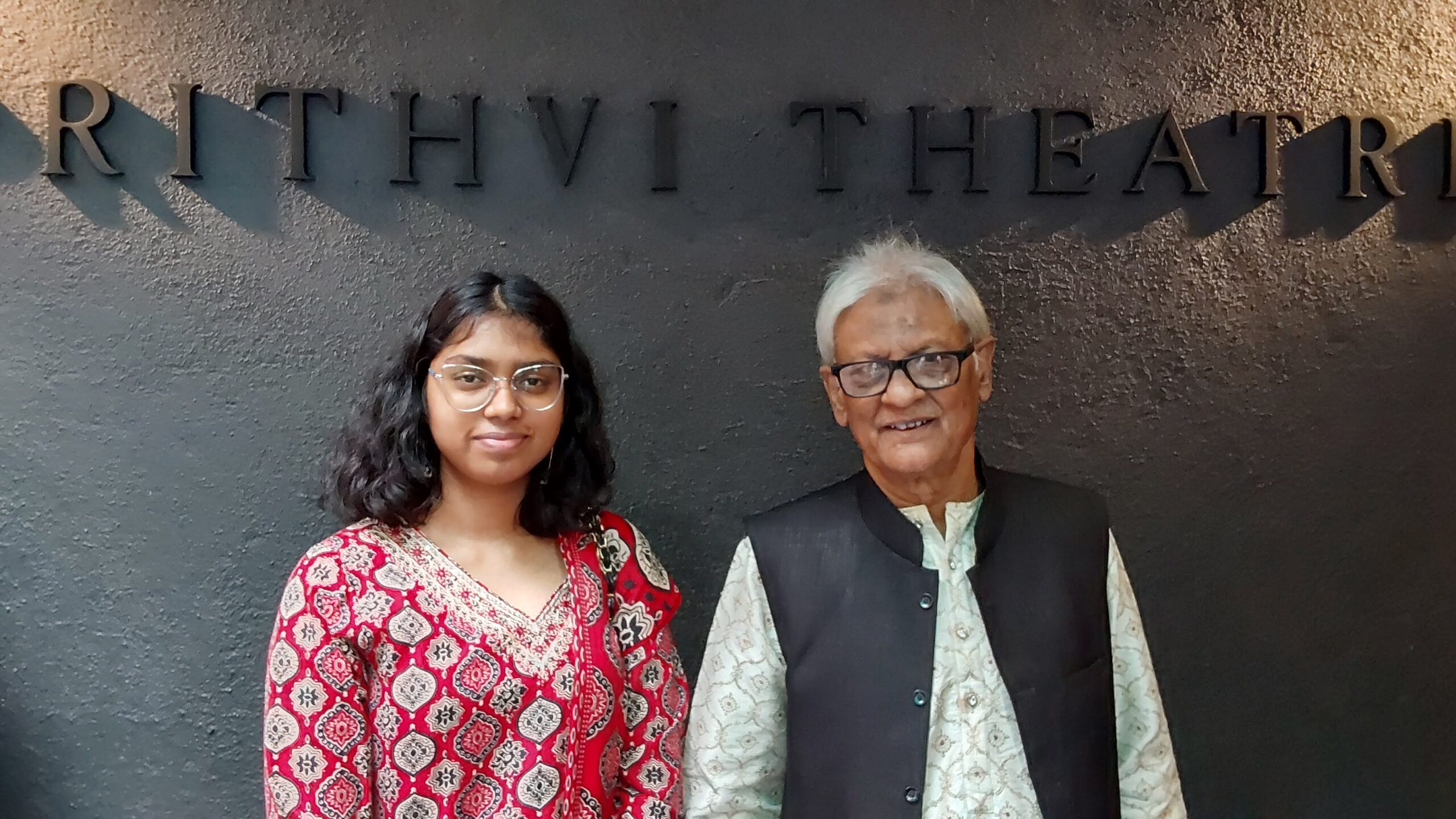

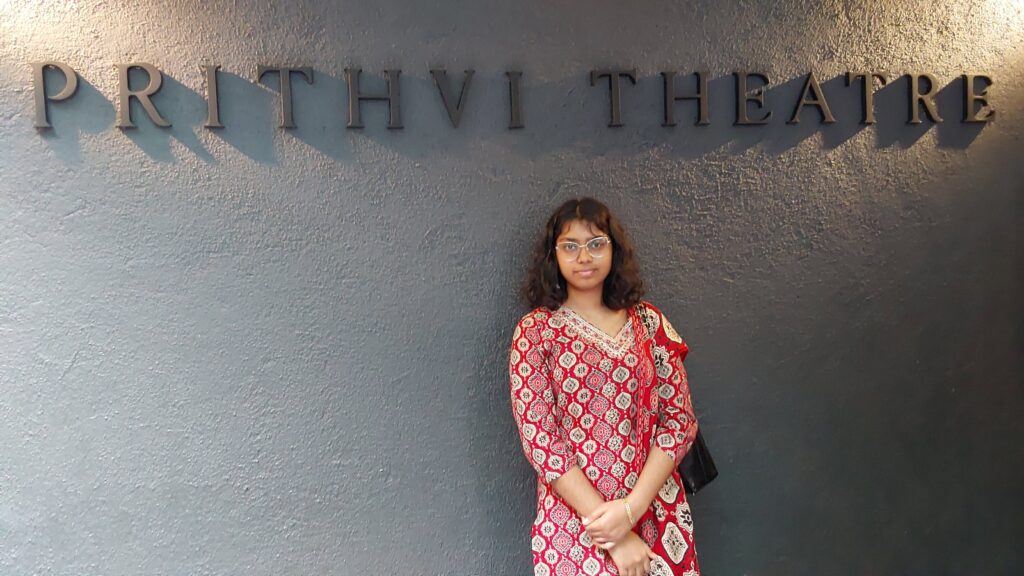
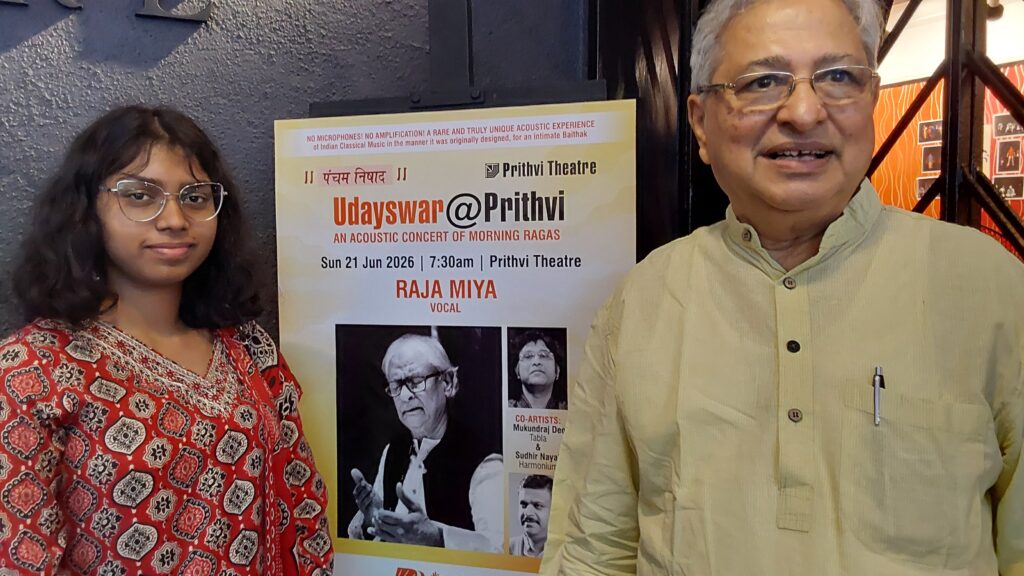
I am sharing my memorable morning of music, books, and inspiration with Raja Miyan of the Agra Gharana at Prithvi Theatre, Mumbai.
My first journey to Mumbai became one of the most memorable experiences of my life. It was 21 June, a morning I will always remember. I was near Juhu Beach, and from there I reached the historic Prithvi Theatre to attend a special Indian classical music concert. For me, this was not just a visit to a theatre. It was a day filled with learning, music, art, culture and inner joy. I had gone to listen to the great Hindustani classical vocalist Raja Miya, and the experience stayed with me deeply.
A Morning at Prithvi Theatre
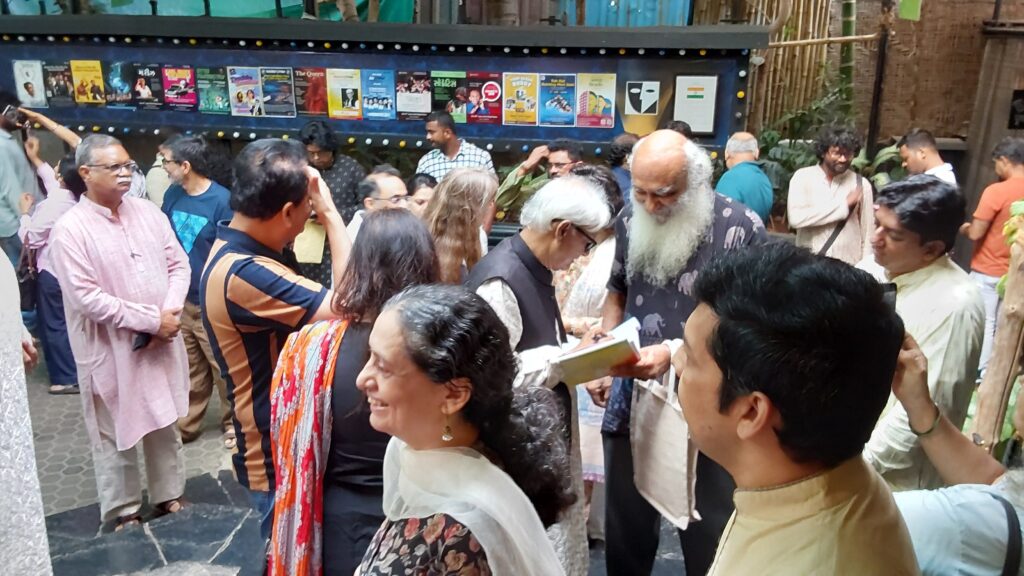
The atmosphere at Prithvi Theatre was very different from ordinary performance spaces. The hall was fully packed. People had come early in the morning to listen to Indian classical music with complete attention and respect.
I was deeply touched to see how passionate Mumbai audiences are about classical music. Everyone was listening silently and seriously. There was no distraction, no unnecessary movement and no disturbance. It felt as if the whole theatre had become one peaceful space of music.
The programme continued for nearly three hours, and I remained completely mesmerised throughout. Every moment felt meaningful. The morning, the theatre, the artist, the audience and the music together created a beautiful memory for me.
Before I begin, I would like to share a few special insights about Raja Miyan Ji.
The Artist: Raja Miya Ji
The main attraction of the concert was Raja Miya Ji, whose real name is Ghulam Hussain Khan. He belongs to the celebrated Agra Gharana, one of the most respected traditions of Hindustani classical music.
Raja Miya Ji, born Ghulam Hussain Khan, is a distinguished Hindustani classical vocalist belonging to the celebrated Agra Gharana, one of India’s most respected and powerful vocal traditions. Popularly known as “Raja Miya”, he represents a rich musical inheritance shaped by discipline, depth, voice culture and devotion to classical purity.
He was born into an illustrious musical family of the Agra Gharana. He is the son of the noted vocalist Ustad Anwar Hussain Khan, and from an early age he was surrounded by the atmosphere of music, riyaz and traditional learning. His musical journey was further strengthened through rigorous training under great masters such as Ustad Khadim Hussain Khan and Ustad Yunus Hussain Khan.
Through this deep training, Raja Miya Ji inherited the grandeur, strength and seriousness that define the Agra style of singing. The Agra Gharana is known for its powerful voice production, strong layakari, nom-tom alaap, bol-baant and deep raga elaboration. Raja Miya carries these qualities with grace and command.
His singing is marked by a powerful and expressive voice, careful treatment of ragas, and a strong connection with the traditional compositions of the gharana. He is especially known for his nom-tom alaap, bol-baant, and evocative presentation of rare ragas. His music reflects the legacy of great masters such as Ustad Faiyaz Khan, whose contribution to the Agra Gharana remains legendary.
Raja Miya Ji has performed at several prestigious music festivals and cultural institutions, including the Sawai Gandharva Music Festival and the National Centre for the Performing Arts. His performances continue to inspire serious listeners of Hindustani classical music. He is regarded as a respected torchbearer of the Agra Gharana tradition.
Co-Artists of the Concert
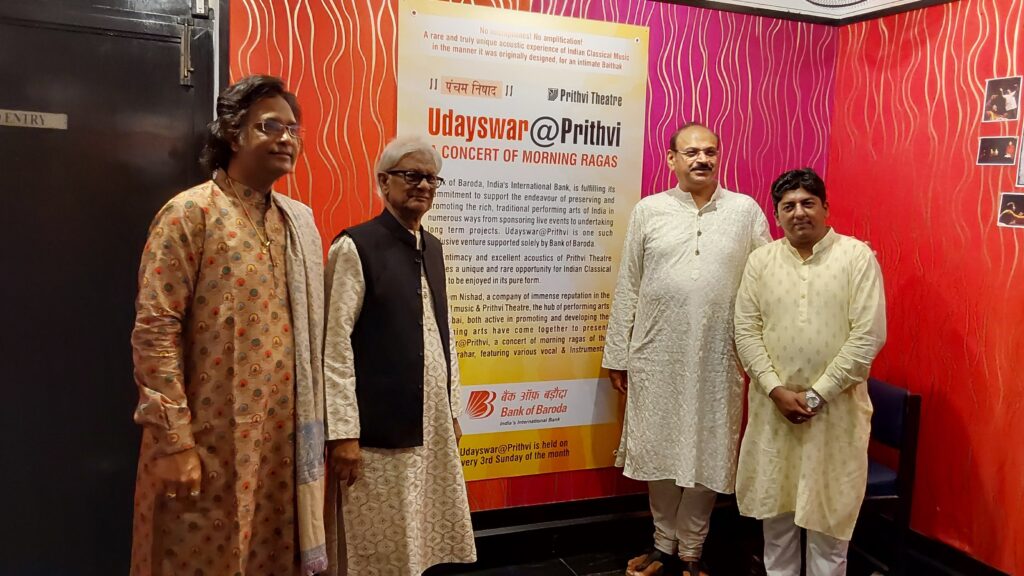
At the Prithvi Theatre concert, Raja Miya was accompanied by highly skilled co-artists who added depth, rhythm and melodic support to the performance.
| Role | Artist Name | Contribution |
| Main Vocalist | Raja Miya | Presented the main vocal performance in the Agra Gharana tradition |
| Tabla | Mukundraj Deo | Provided rhythmic support and enhanced the layakari of the performance |
| Harmonium | Sudhir Nayak | Offered melodic accompaniment and supported the raga development |
| Tanpura Artists | Two supporting artists | Created the continuous drone and spiritual base of the concert |
The presence of tabla, harmonium and tanpura created a complete classical environment. The tanpura gave the performance its meditative base, while the tabla brought rhythmic energy. The harmonium supported the melody and helped maintain the emotional flow of the ragas.
The most special feature of the concert was that it was presented without microphones and without amplification. This made the listening experience extremely intimate and natural. The audience could hear the real voice of the artist and the natural sound of each instrument. It felt as if the music was reaching the listeners directly, without any technical barrier.
Presented Ragas and Compositions
The concert repertoire was carefully designed around morning ragas. It included serious, rare and traditional compositions associated with the Agra Gharana.
| No. | Raga | Composition | Form / Taal | Composer / Tradition |
| 1. | Raga Ramkali | Aaj Radhe tore badan pe | Traditional composition in Vilambit Ek Taal | Traditional |
| 2. | Raga Ramkali | Un sang lagi | Drut Bandish in Teen Taal | Composed by Ustad Faiyaz Khan |
| 3. | Raga Kukub Bilawal | Shambhu pat sees pat | Jhap Taal Madhyalaya | Traditional / Agra repertoire |
| 4. | Raga Kukub Bilawal | Tero rang roop Chhab dekhat | Drut Bandish in Teen Taal | Composed by Ustad Vilayat Hussain Khan |
| 5. | Raga Gurjuri Todi | Ab Gunan ki larai lariye | Rare composition in Drut Teen Taal | By Ustad Faiyaz Khan |
| 6. | Raga Dev Gandhar | Barjori na karo re kanhai | Bandish in Drut Teen Taal | Traditional / Agra repertoire |
| 7. | Raga Bhairavi | Banao batiyan | Dadra | Composed by Ustad Faiyaz Khan |
Raga Ramkali
The concert began with Raga Ramkali, a serious and meditative morning raga. Raja Miya presented Aaj Radhe tore badan pe, a traditional composition in Vilambit Ek Taal. The slow tempo allowed the raga to unfold with depth and patience. He then presented Un sang lagi, a Drut Bandish in Teen Taal, composed by Ustad Faiyaz Khan. This brought energy and rhythmic movement to the performance. The transition from vilambit to drut showed the strength of the Agra style.
Raga Kukub Bilawal
The next major presentation was Raga Kukub Bilawal. This is a rare and beautiful raga, not commonly heard in every concert. Raja Miya presented Shambhu pat sees pat in Jhap Taal Madhyalaya. The composition reflected the traditional character of the gharana. He also sang Tero rang roop Chhab dekhat, a Drut Bandish in Teen Taal, composed by Ustad Vilayat Hussain Khan. The bandish carried both beauty and rhythmic sharpness, giving the audience a glimpse of the richness of the Agra repertoire.
Raga Gurjuri Todi
The concert also included Raga Gurjuri Todi, a rare and deeply expressive raga. Raja Miya presented Ab Gunan ki larai lariye, a rare composition in Drut Teen Taal by Ustad Faiyaz Khan. This presentation was special because rare ragas require great command, maturity and sensitivity. Raja Miya’s treatment of the raga showed his deep understanding of classical grammar and emotional expression.
Raga Dev Gandhar
Another important part of the concert was Raga Dev Gandhar. The bandish presented was Barjori na karo re kanhai in Drut Teen Taal. This raga added another shade to the morning concert. Its presentation reflected the devotional and expressive quality of Hindustani classical music. The composition was rendered with clarity, strength and emotional depth.
Raga Bhairavi
The concert concluded with Raga Bhairavi, one of the most beloved ragas traditionally used to end classical music concerts. Raja Miya presented Banao batiyan, a Dadra composed by Ustad Faiyaz Khan.
Bhairavi brought a soft, emotional and graceful conclusion to the morning. After the intensity of serious ragas, this final presentation created a feeling of peace and fulfilment among the listeners.
I express my deepest respect, heartfelt admiration, and sincere gratitude to this great artist.
About Udayswar@Prithvi
Udayswar@Prithvi is a special concert series dedicated to morning ragas. It is presented by Pancham Nishad and Prithvi Theatre. The idea of listening to morning ragas in an intimate theatre space is very beautiful. The event offers a rare opportunity to experience Indian classical music in its pure acoustic form, without microphones and amplification.
This makes the programme very different from regular concerts. It brings the listener closer to the artist and allows the natural beauty of the music to be experienced directly.
Prithvi Theatre and Pancham Nishad
Prithvi Theatre is one of Mumbai’s most respected cultural spaces. It has contributed greatly to performing arts and has created a meaningful space for artists and audiences. The programme was also supported by Pancham Nishad, an organisation known for promoting India’s rich musical heritage. Founded in 1996, by Shashi Vyas, Pancham Nishad has organised many Indian classical music concerts across the country. The event was brought to the audience with the support of Bank of Baroda, which has been associated with promoting and preserving India’s traditional performing arts. Shashi Vyas is a former Chartered Accountant, the son of the legendary Hindustani classical vocalist Padma Bhushan Pandit C.R. Vyas.
My Book Discovery at Prithvi Theatre
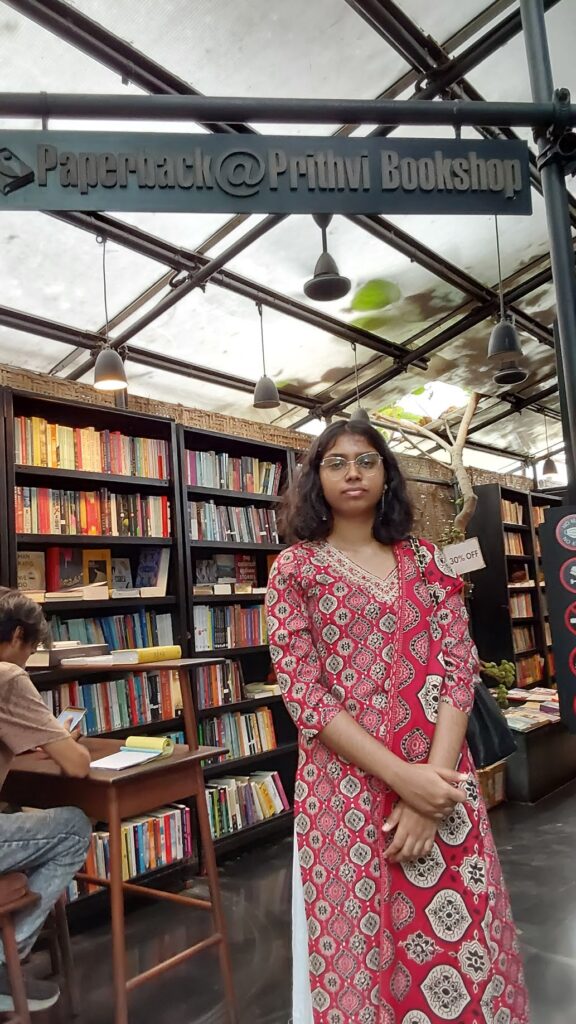
After the concert, I also visited the bookshop inside Prithvi Theatre. It was a very special place for me. This was not just a normal bookshop. It had a rare and rich collection of books on music, art, philosophy, education, cinema, journalism, creativity and great personalities.
I love books. I cannot stop myself when I see meaningful books. At my home, we have a collection of more than 2,000 books, magazines and reports. So this bookshop made me very happy.
I bought some books from there, and each one reflected my interests in learning, creativity, music and personal growth.
| No. | Book | Author / Illustrator | Theme |
| 1 | Journalism | Joe Sacco | Journalism and graphic storytelling |
| 2 | Manga Shakespeare: Othello | Illustrated by Ryuta Osada | Literature, manga and drama |
| 3 | Manga Shakespeare: The Tempest | Illustrated by Paul Duffield | Shakespeare in creative visual form |
| 4 | The Inner Game of Music | Barry Green with W. Timothy Gallwey | Music, performance and inner discipline |
| 5 | How Women Rise | Sally Helgesen and Marshall Goldsmith | Self-growth, leadership and confidence |
Each book attracted me for a different reason. Journalism connected with truth and storytelling. The Manga Shakespeare books made classic literature visually exciting. The Inner Game of Music connected directly with my interest in music and performance. How Women Rise felt inspiring for personal growth and confidence.
A Day of Learning, Music and Reflection
This day gave me much more than a concert experience. It gave me a feeling of connection with Indian culture, classical music, books and learning. I realised that learning does not happen only in classrooms. It can happen in a theatre, in a musical note, in silence, in a bookshop, in the discipline of an artist and in the seriousness of an audience. For me, this visit to Prithvi Theatre became a complete experience of music, art, literature and self-reflection.
Listening to such a great singer early in the morning was a true blessing for me. The programme was peaceful, powerful and unforgettable. I felt blessed to experience such pure music in such a beautiful place.
The natural sound of the voice and instruments touched my heart. It felt like meditation. The entire morning was full of inspiration. This was my first Mumbai journey, but it became very special. It gave me memories that I will always carry with me.